


BLK vs. TROW: Which Asset Manager’s Dividend Actually Survives the Next Market Crash?
BLK vs. TROW: Which Asset Manager’s Dividend Actually Survives the Next Market Crash?

Chris LangeThu, September 24, 2026 at 3:11 PM UTC
0

tete_escape / Shutterstock.comQuick Read -
BLK's record $15.34 trillion AUM and 10% organic fee growth give its dividend far more durability than TROW, which bled $56.9 billion in 2025 outflows.
TROW yields nearly 5% versus BLK's 2%, but has posted negative Q4 operating cash flow twice while still paying shareholders.
BLK raised its dividend roughly 10% while TROW nudged payouts by pennies, and CEO Rob Sharps warned flows will worsen in the second half.
Read More: Learn 7 secret wealth tips high net worth investors use that most investors miss (sponsor)
Retirement investors weighing BlackRock (NYSE:BLK) against T. Rowe Price (NASDAQ:TROW) are really asking one question: when the next drawdown hits and fee revenue falls with asset prices, which of these dividends actually holds? Asset manager economics work differently from those of a utility or staple. Revenue is a fee levied on assets under management, so a bear market compresses the top line automatically. That mechanical link makes the mix of the fee base the thing that decides survival.
Yield and Payout Coverage
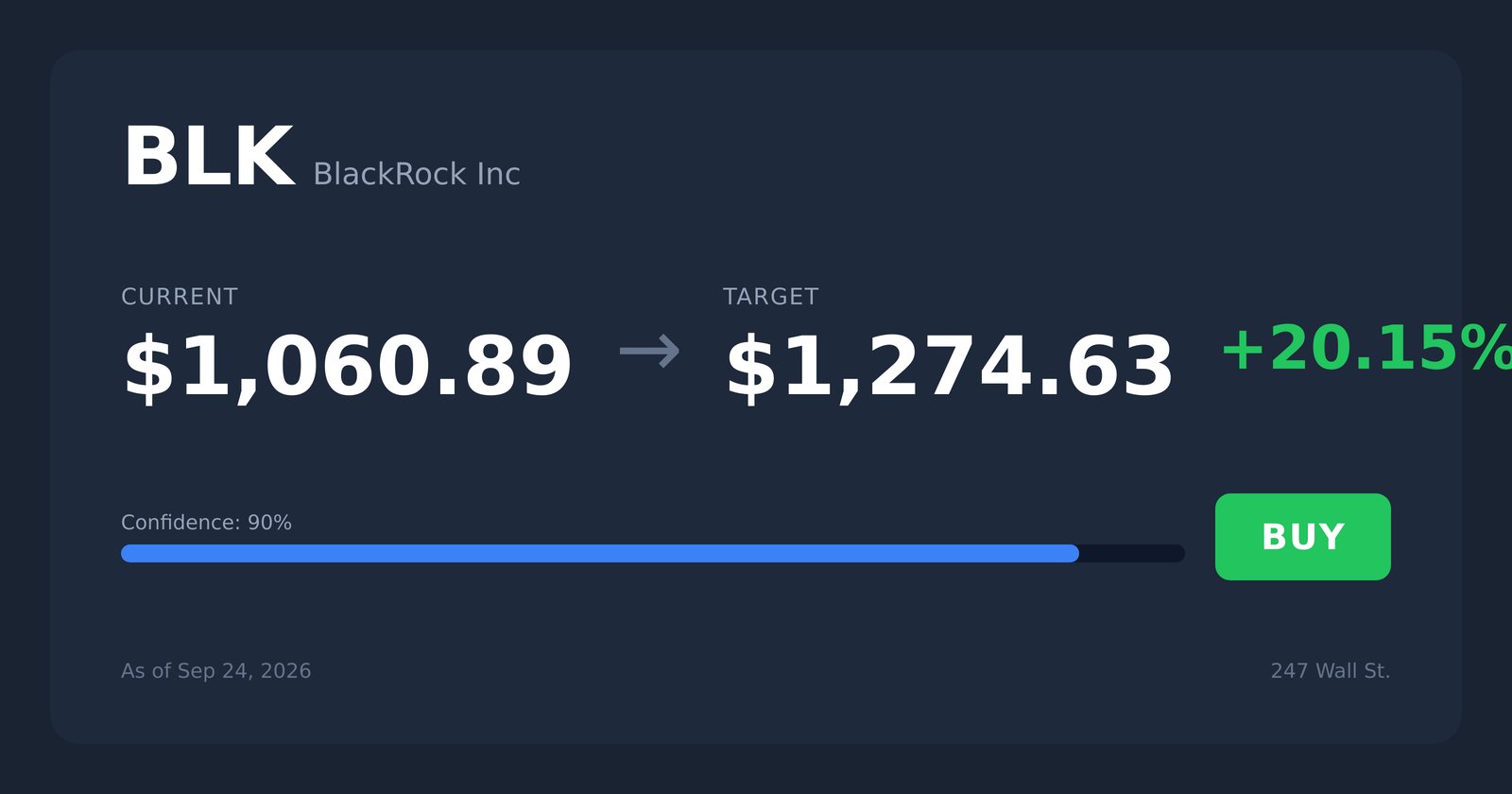
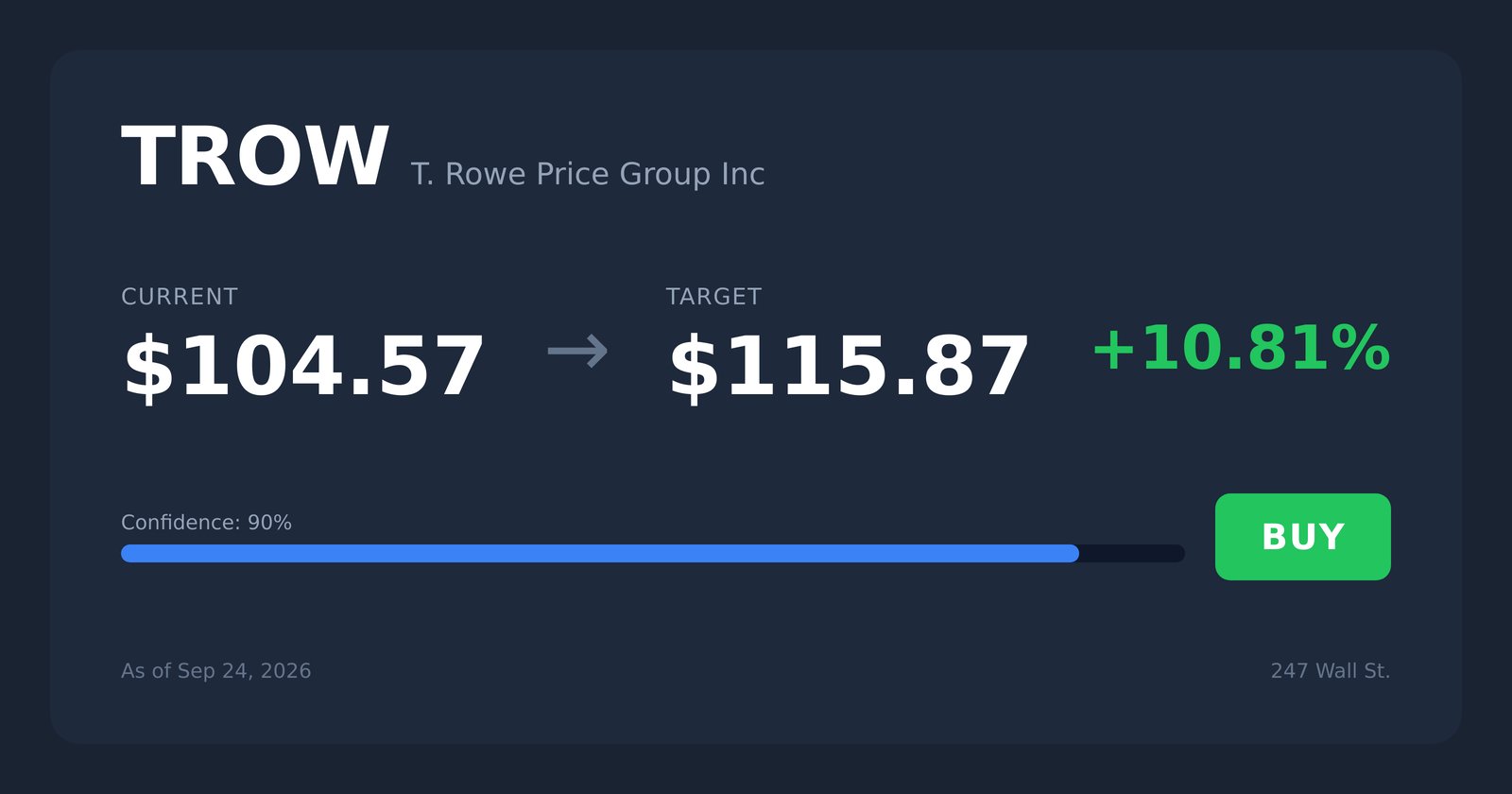
TROW pays a forward annualized dividend of $5.20 against a share price of $104.57. BLK pays a forward annualized dividend of $22.92 against a share price of $1,057. The raw yield contest goes to TROW by a wide margin.
TROW generated $1.75 billion of operating cash flow in 2025 against $1.14 billion in dividend payouts. BLK generated $3.93 billion in operating cash flow against $3.35 billion in dividend payouts. Both are covered on a full-year basis, but TROW has repeatedly reported negative operating cash flow in Q4, including -$18.7 million in Q4 2025 and -$281.9 million in Q4 2024, while still paying the dividend. Winner: TROW on yield, BLK on coverage cushion.
Learn 7 Secret Wealth Tips High Net Worth Investors Use
How do you continue to grow a seven-figure portfolio in retirement? The last thing you want is to run out of money, you want your money to generate lasting income while you enjoy your life.
Learn seven strategies high net worth investors use with new report: The Seven Secrets of High Net Worth Investors from Fisher Investments. Get your guide here(sponsor)
Durability of the Fee Base
BLK ended Q2 2026 with a record $15.34 trillion in AUM, $192 billion of net inflows in the quarter, and $868 billion of trailing twelve-month net inflows with 10% organic base fee growth. iShares crossed $6 trillion in AUM, HPS is adding roughly $230 million in quarterly fees, and Aladdin ACV is growing 15%. As CEO Laurence Fink put it on the Q2 call, "It's our breadth, not beta, that powers organic growth, meaning we can deliver across market environments."
BLK Price Target — 24/7 Wall St.
TROW is fighting the opposite current. Net client outflows totaled $56.9 billion in 2025 and another $6.5 billion in Q2 2026, while the effective fee rate slipped to 38.1 basis points from 40.5 bps in Q4 2024. CEO Rob Sharps warned that "we expect net flows in the second half of the year to be meaningfully more challenging than the first half." A drawdown that hits equity markets would compound organic outflows in TROW's fundamental active equity book, which still carries $900 billion of AUM. Winner: BLK, decisively.
Advertisement
TROW Price Target — 24/7 Wall St.Dividend Growth and Balance Sheet
BLK raised its quarterly dividend from $5.21 in 2025 to $5.73 in 2026, roughly a 10% bump. TROW nudged its payout from $1.27 to $1.30 over the same window. Both have multi-decade streaks of higher annual dividends, but BLK's growth rate is running several times faster right now.
Balance sheets favor BLK on scale and TROW on simplicity. BLK carries $57.6 billion of shareholder equity and $40.2 billion in retained earnings against roughly $12.7 billion in long-term debt. TROW has $11.0 billion of shareholder equity, $3.23 billion in cash, and no long-term debt on the latest annual reports. Winner: BLK on growth, TROW on debt-free simplicity.
BLK Analyst Ratings — 24/7 Wall St.Verdict
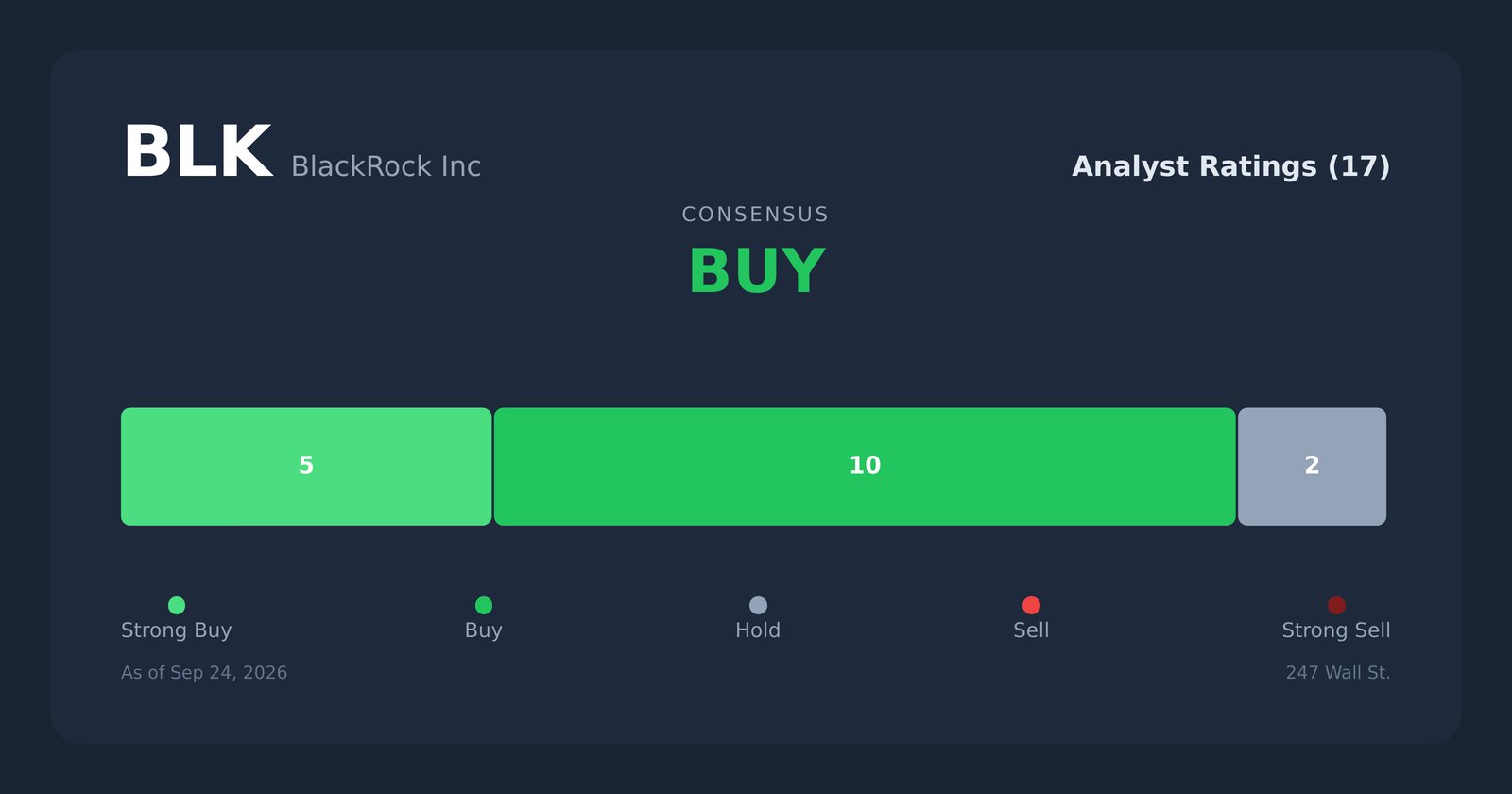
BlackRock wins the durability contest. The mechanical hit from a market drawdown lands on both, but BLK offsets it with private markets, technology subscription revenue growing 13% year over year, and a firehose of ETF inflows. The specific risk to the BLK dividend is integration execution across HPS, GIP, and Preqin combined with a higher diluted share count from acquisition-related issuance.
TROW still suits one specific investor: someone who wants the highest current income today, accepts persistent active-equity outflows and a compressing fee rate, and will not panic if a drawdown forces flat dividend growth. The specific risk to TROW's dividend is the compounding effect of a market decline layered on top of the $56.9 billion of 2025 outflows, which would hit revenue from both directions at once.
For a retirement portfolio that needs the check to keep arriving and growing through the next bear market, BlackRock is the more durable income stream.
Learn 7 Secret Wealth Tips High Net Worth Investors Use
How do you continue to grow a seven-figure portfolio in retirement? The last thing you want is to run out of money, you want your money to generate lasting income while you enjoy your life.
Learn seven strategies high net worth investors use with new report: The Seven Secrets of High Net Worth Investors from Fisher Investments. Get your guide here(sponsor)
Contact editorial@247wallst.com for any questions or corrections.
Source: “AOL Money”
