


Russia sanctions bill includes highly controversial provision on Trump’s tariff power
Russia sanctions bill includes highly controversial provision on Trump’s tariff power

Steve Benen Mon, August 10, 2026 at 1:53 PM UTC
8
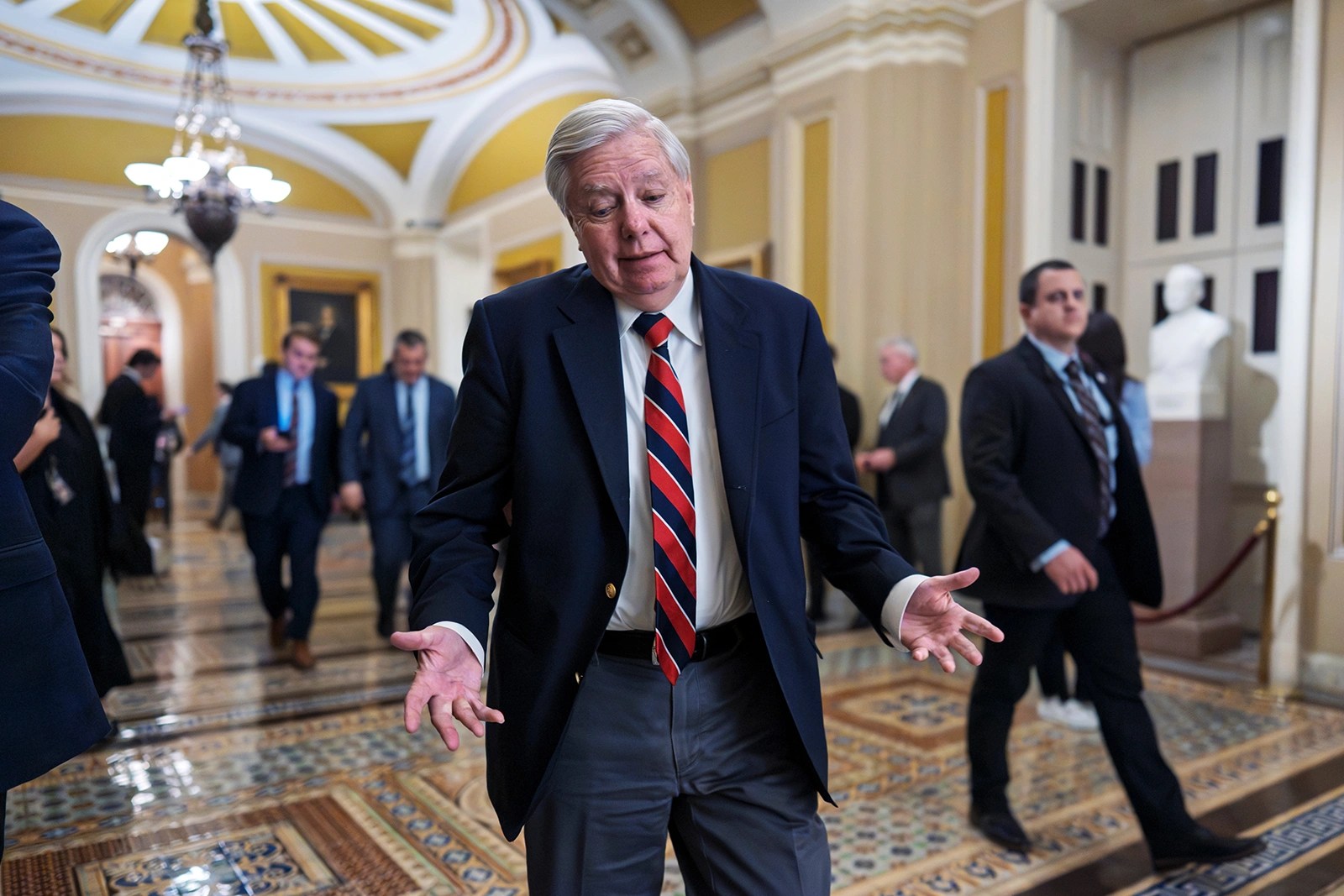
On the surface, the Lindsey O. Graham Sanctioning Russia Act is a fairly straightforward proposal. As the name implies, the legislation, which was championed by the late South Carolina Republican, is designed to impose new economic penalties on Russian President Vladimir Putin’s regime.
GOP leaders set out to advance the legislation before senators broke for their August recess, and they succeeded: The bill passed by an 86-11 vote on Friday afternoon.
But as the legislation now heads to the House, it’s worth pausing to note the concerns of the 11 senators who voted against the bill. The New York Times reported:
The measure passed over the objections of Democrats who had expressed concerns that it would hand over new tariff powers to the president when Mr. Trump has already stretched the boundaries of his trade authority, sidestepping Congress.
But the Senate defeated a bid by Senator Rand Paul, Republican of Kentucky, to remove the tariff provisions. Mr. Paul castigated his colleagues for delegating their constitutional tariff authority.
“What sort of feckless Congress gives away their power?” Paul said before the vote.
It’s not an unreasonable question, in part because the legislative branch is supposed to have important powers over international trade policies, and in part because President Donald Trump’s record on tariffs has been an embarrassing failure.
Nevertheless, MS NOW host Catherine Rampell wrote a persuasive piece for The Bulwark, explaining that the legislation named after Graham “could allow Trump to drop 100% tariffs on virtually any country he likes, for as long as he likes, and with pretty much bulletproof legal authority to do so, which means even the Supreme Court couldn’t bail out Congress (or the rest of us) next time.”
The point isn’t whether imposing additional sanctions on Russia is a good idea. Rather, the debate is about a tangentially related element that was included in the legislative text.
Advertisement
In his latest Washington Post column, Max Boot endorsed the sanctions policies but also raised a red flag about the tariff provisions. “In sum, the legislation gives Trump an awful lot of authority to impose massive tariffs on a number of countries, notably India and China, if they don’t cut off all Russian energy imports,” he wrote. “They are unlikely to do so, because both India and China are heavily reliant on Russian energy — all the more since the U.S.-Iran war has reduced oil exports from the Persian Gulf.”
The column added, “The problem is that there is nothing to stop Trump from imposing tariffs on any of those countries for some other reason and using the Graham bill as legal justification. He might even use the legislation to go after U.S. allies in Europe and Asia. … Given the president’s penchant for igniting costly trade wars on a whim, the last thing that Congress should be doing is handing him more authority to impose massive tariffs. It’s like giving matches to a pyromaniac.”
At this point, the obvious question is why most Senate Democrats ended up backing the Lindsey O. Graham Sanctioning Russia Act at all. For some, it was a distasteful tradeoff: They didn’t like the tariff provisions, but they didn’t want to see the underlying point of the bill die, especially as Putin’s deadly violence in Ukraine intensifies.
But others pointed to a commitment from U.S. Trade Representative Jamieson Greer, assuring senators that the administration would honor guardrails on the tariff authorities.
Don’t be surprised if a cross-section of House members pushes for significant changes to the bill. Watch this space.
The post Russia sanctions bill includes highly controversial provision on Trump’s tariff power appeared first on MS NOW.
This article was originally published on ms.now
Source: “AOL Breaking”
