


TACO Trump secretly admits Iran war may end without nuclear deal, insider says
TACO Trump secretly admits Iran war may end without nuclear deal, insider says

Maria Villarroel Mon, August 10, 2026 at 1:40 PM UTC
0
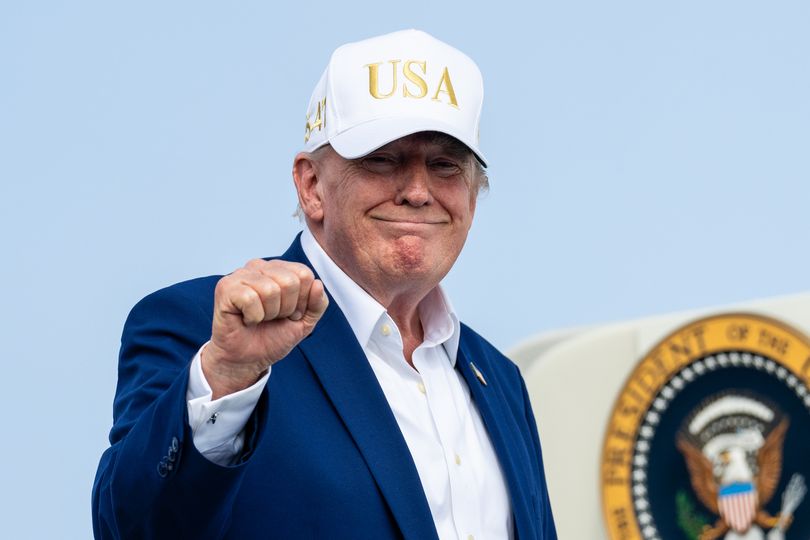
Since the beginning of the war, the president has provided different rationales for starting the conflict in the Middle East on Feb. 28. -Credit:Getty Images
President Donald Trump has privately admitted to his aides that he may need to end the war in Iran without achieving its main objectives related to the country’s nuclear program, in the latest blow to the administration.
Since the beginning of the war, the president has provided different rationales for starting the conflict in the Middle East on Feb. 28. However, one of the most constant reasons has been tampering with Iran’s nuclear program to prevent it from building a nuclear bomb.
Despite repeated negotiations, little progress has been made in the nuclear question, leaving President Trump with few options but to end the war without achieving that goal, he has privately told aides, according to The Wall Street Journal. Instead, he says his goal now is to get ships to move through the Strait of Hormuz again.
• Pete Hegseth forced to admit 'conflict' in Iran is actually war
• Iran humiliates Trump by mocking his 'theater diplomacy' in savage shushing taunt
But despite the president’s hope, it seems like his options for walking away from the conflict unscathed are rapidly narrowing, as Iran continues to intensify the war, insisting on higher prices to allow the free flow of traffic in Hormuz.
“Iran’s recent hardline demands for reopening the strait make it increasingly difficult for the president to manufacture a face-saving off-ramp from the conflict,” Mona Yacoubian, director of the Middle East program at the Center for Strategic and International Studies, a Washington think tank, said.
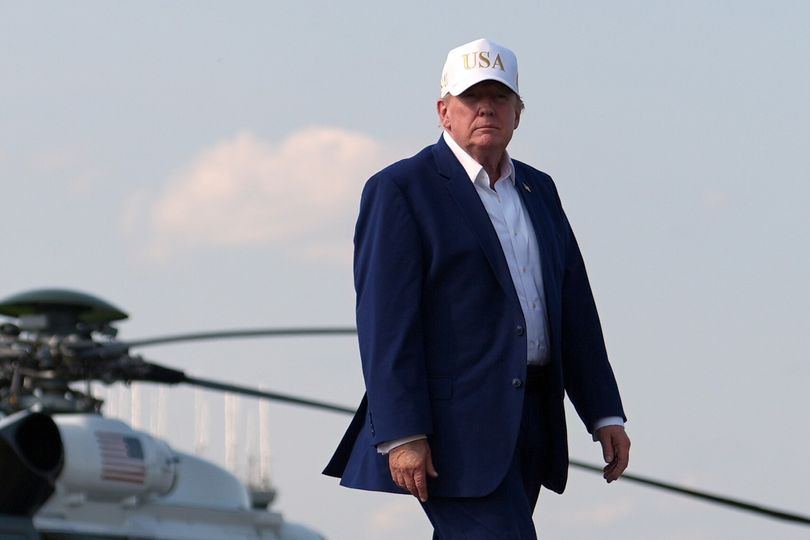
According to the Wall Street Journal, Trump—aware of his waning options to end the war—has tried to soothe his aides, who continue to panic over the months-long conflict -Credit:AP Photo/Julia Demaree Nikhinson
According to the Wall Street Journal, Trump—aware of his waning options to end the war—has tried to soothe his aides, who continue to panic over the months-long conflict. He has reportedly told his staff that Iran will likely not restart its nuclear program while he’s in office. He has also privately and publicly brushed off concerns about uranium buried in Iran.
“We’ve already got the nuclear material, because it’s so far underground,” he said at a July NATO summit.
This comes as Iran’s leaders are reportedly feeling their own victory is looming in the war, as they are betting that military pressure will ultimately force the U.S. to accept their control over the crucial waterway for global energy.
Simultaneously, Iran says it is close to reaching a deal with Oman to manage the strait, which runs between the countries. But on Saturday, Tehran said the strait will not open until the U.S. “corrects its behavior,” saying it must permanently end the war, lift its naval blockade of Iranian ports and withdraw its military from the area. It alsp must “completely compensate” Iran for war damage, lift sanctions and “unconditionally” release frozen assets.
Advertisement
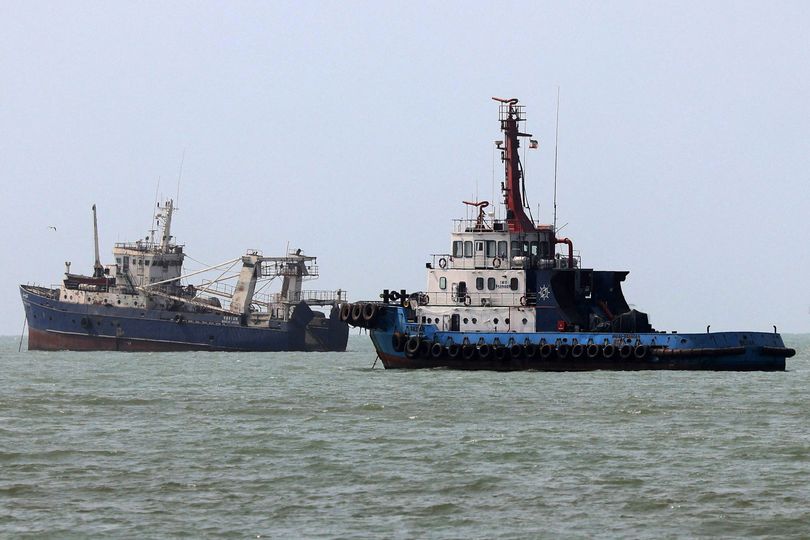
A deal with Oman would formalize Tehran’s control over what had been an open international waterway before the war, one that carried a fifth of the world’s traded oil and gas -Credit:AFP via Getty Images
A deal with Oman would formalize Tehran’s control over what had been an open international waterway before the war, one that carried a fifth of the world’s traded oil and gas.
Adding to Iran’s advantage is its knowledge about diminishing stockpiles of key U.S. weapons, such as advanced missile interceptors, how unpopular the war is with Americans, and the predictions that, as long as the strait is largely closed, the price of gas and other goods will stay high ahead of U.S. congressional elections in November.
Iran is also aware that trying to open it by force would be costly and may require American ground troops. They know their Houthi allies in Yemen could widen the war and disrupt another major trade route.
However, Iran’s strategy could be risky. Trump points to strikes that have decimated Iran’s top leadership, navy, and air force. He alternates between threatening escalation and saying talks are going well. Iran’s own economy has been battered, in part because of a U.S. blockade. Iranians rose up in mass protests just months ago and could do so again.
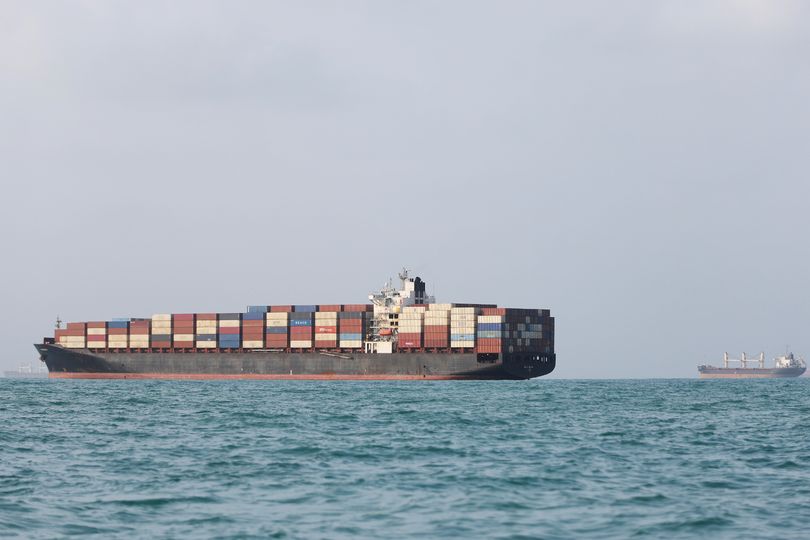
Iran is also aware that trying to open it by force would be costly and may require American ground troops -Credit:Getty ImagesIran feels time is on its side
To borrow a phrase from Trump’s own theory of geopolitics, Iran believes it holds the cards.
“They started the war, but its end was never with them. We always decide for ourselves when it ends,” Mahdi Mohammadi, an adviser to Iran’s chief negotiator, posted on social media. “Iran is going after the enemy’s defeat — not an agreement.”
He said a surprise Iranian attack on Jordan in July “compensated” for a drop in oil prices. That contributed to the collapse of an interim agreement reached in June that had offered significant concessions to Iran, including a U.S. waiver to sell oil internationally and the promise of broader sanctions relief.
Iran has repeatedly said the Strait of Hormuz will not go back to being an open waterway, and that it will keep attacking ships trying to transit without its permission. Iran’s joint military command has called it an “unbreakable red line.”
“For Iran, the Strait of Hormuz has become a strategic lever for deterrence, maintaining the regional balance of power, and reshaping the security rules in the Persian Gulf,” said Mostafa Najafi, a Tehran-based security analyst.
That poses a major obstacle to ending the war, much less resolving the even more complex, long-standing dispute over Iran’s nuclear program.
“The atomic issue, because of the conflict in the Strait of Hormuz, has been pushed to the side, and in reality, that is in Iran’s interests,” said Rahman Ghahremanpour, an Iran-based analyst. Control of the strait would give Iran leverage if the nuclear talks resume, he added.
Source: “AOL Breaking”
